Tryed or Tried? Do or Do Not, There Is No Try—Unpacking Words, Phrases, and Everyday Expressions
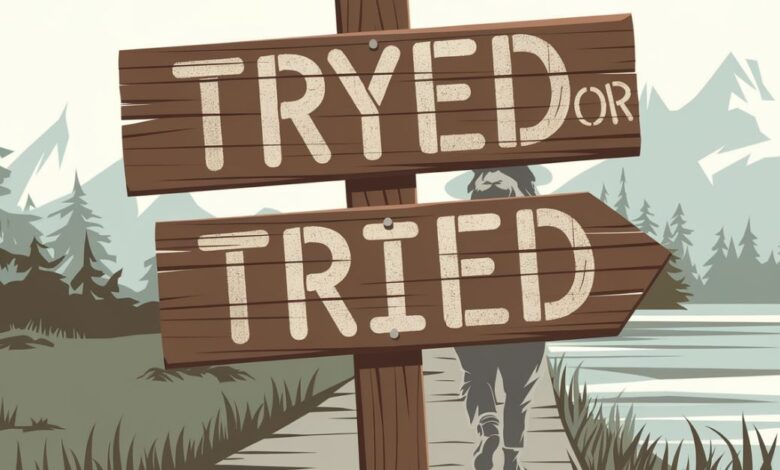
Have you ever come across a phrase online, paused, and thought, “Wait, is that spelled right? Or what does that even mean?” You’re not alone. Words like tryed or tried, popular quotes such as do or do not there is no try, motivational lines like get rich or die trying, and even system messages like “something went wrong, refresh or try again later” all have a way of sticking in our minds. Some inspire us, some confuse us, and others just frustrate us when we see them pop up on a screen at the worst moment.
In this article, we’re going to break down these phrases one by one. We’ll talk about correct spellings, explore cultural references, and even dive into how technology throws strange messages at us. By the end, you’ll not only know the right words to use but also understand why these expressions matter in everyday life.
Tryed or Tried: Which One Is Correct?
Let’s start with a common spelling question: is it tryed or tried?
The correct spelling is tried.
Why “Tryed” Looks Tempting
It’s easy to see why people type “tryed.” After all, the base word is try, so adding -ed feels natural. In most cases, you simply attach -ed to form the past tense of a verb. But English likes to make exceptions.
Why “Tried” Is Correct
When a verb ends with “-y” preceded by a consonant (like try, cry, fry), the y changes to an i before adding -ed.
- Try → Tried
- Cry → Cried
- Fry → Fried
So remember: it’s always tried, never tryed.
Example Sentences
- I tried calling you yesterday, but the line was busy.
- She tried her best to finish the project on time.
- They tried different approaches until one worked.
If you’ve been guilty of typing “tryed,” don’t worry—it’s one of the most common mistakes.
Do or Do Not, There Is No Try: A Legendary Quote
If you’ve ever watched Star Wars, you’ve probably heard the famous line: “Do or do not, there is no try.” Spoken by Master Yoda, this line has traveled far beyond the galaxy far, far away.
What Does It Mean?
At its core, this quote is about commitment. Yoda tells Luke Skywalker that effort without determination isn’t enough. You either take action and see it through, or you don’t. Simply “trying” isn’t the same as truly committing.
Why It Resonates with People
- It’s short but powerful.
- It challenges excuses.
- It reminds us that real growth comes from decisive action.
Real-Life Applications
- In fitness: Don’t just “try” to work out—commit to it.
- In work: Don’t just “try” to finish tasks—complete them.
- In mindset: Remove “try” from your vocabulary when you mean “do.”
This one quote has motivated millions, proving how a single line of dialogue can become timeless wisdom.
Get Rich or Die Trying: A Phrase That Defines Ambition
Another well-known phrase is “get rich or die trying.” It became hugely popular thanks to rapper 50 Cent, who used it as the title of his 2003 album and later a movie.
The Meaning Behind the Words
At face value, it sounds extreme: pursue wealth or lose everything in the process. But at a deeper level, it reflects determination, hustle, and a refusal to quit. It represents the mindset of going all in on your dreams.
Why People Connect with It
- It speaks to ambition.
- It reflects the struggles of those chasing success against the odds.
- It’s raw and unapologetic, making it powerful as a motivational mantra.
In Everyday Life
Not everyone takes it literally. For many, it simply means working tirelessly for their goals—whether financial, personal, or professional. It captures the idea of resilience and persistence.
Tri-State or Tri State: Which Is Correct?
Now let’s shift to another question: tri-state or tri state?
The correct form is usually tri-state, with a hyphen.
Why the Hyphen Matters
“Tri” means three, and when combined with “state,” it describes a region made up of three states. The hyphen ties the words together to show they form one concept.
For example:
- The Tri-State area around New York refers to New York, New Jersey, and Connecticut.
- Other tri-state regions exist across the U.S., like the one including Ohio, Kentucky, and Indiana.
Without the Hyphen
Sometimes you’ll see “tri state” without a hyphen, especially in informal writing. While people understand the meaning, the grammatically correct and widely accepted version is tri-state.
Something Went Wrong. Refresh or Try Again Later.
We’ve all seen it: that frustrating message when a website or app stops working—“Something went wrong. Refresh or try again later.”
Why Do We See This Message?
This usually happens because of:
- Temporary internet issues
- A website server being down
- An app glitch
- Cached data errors
It’s a catch-all message developers use when they can’t pinpoint the exact cause for the user.
Why It’s So Annoying
- It doesn’t tell you what went wrong.
- It leaves you powerless, with no clear fix.
- It always seems to appear when you need something important done fast.
How to Handle It
- Refresh the page (yes, sometimes it works).
- Clear your browser cache.
- Restart the app or device.
- Wait a while and try again.
The line might sound simple, but it’s become part of our digital lives.
$begin_linkLearn More$end_link: What’s Going On Here?
Occasionally, you might see strange phrases in error messages like “$begin_linkLearn more$end_link.”
This isn’t meant for users—it’s a coding placeholder. It usually appears when a website or app doesn’t render text properly. Instead of showing a clickable link like “Learn more,” it accidentally displays the backend code.
It looks odd, but it tells us how much goes on behind the scenes of even the simplest messages.
Correct This Card Info or Try a Different Card [or_mivem_02]
Here’s another one we’ve all seen during online shopping: “Correct this card info or try a different card. [or_mivem_02]”
What It Means
This pops up when:
- The card number is entered incorrectly
- The expiration date or CVV code doesn’t match
- The bank declines the transaction
The code “[or_mivem_02]” is usually an internal error reference for the payment processor.
How to Fix It
- Double-check your card details
- Make sure your card isn’t expired
- Contact your bank if the issue continues
- Try another card if needed
Though frustrating, this message keeps transactions secure by preventing invalid payments.
Why These Phrases Stick in Our Minds
From spelling confusions to cultural quotes and technical glitches, these phrases stick because:
- They’re tied to strong emotions—frustration, motivation, determination.
- They’re repeated often, whether in classrooms, pop culture, or digital life.
- They spark curiosity—why is one version correct and the other wrong?
Language isn’t just about rules; it’s about how words connect to our experiences.
How to Avoid Common Mistakes
Here are a few quick tips to stay clear and confident:
- For spelling: Remember rules like “change y to i before adding -ed” (tried, cried, fried).
- For phrases: Learn context—Yoda’s “Do or do not” is about commitment, not grammar.
- For technical errors: Understand they’re usually temporary and fixable.
- For hyphens: Use them to connect words into single concepts (tri-state).
The more you notice these patterns, the easier it becomes to avoid confusion.
Wrapping It All Up
We’ve traveled through spelling debates, iconic quotes, cultural mottos, and digital headaches. Here’s the quick recap:
- Tryed or Tried: Always “tried.”
- Do or Do Not, There Is No Try: A timeless quote about commitment.
- Get Rich or Die Trying: A powerful motto about ambition.
- Tri-State or Tri State: Use “tri-state” with a hyphen.
- Something Went Wrong, Refresh or Try Again Later: A common digital error message.
- $begin_linkLearn more$end_link: A coding glitch showing placeholders.
- Correct This Card Info or Try a Different Card [or_mivem_02]: A payment error requiring updated info.
These words and phrases may come from very different places—grammar rules, movies, music, or websites—but they all shape how we read, write, and communicate every day.
So the next time you face one of these questions or errors, you’ll know not just what it means, but why it matters.