Narrow Clavicles – Causes, Appearance, Health Impact, and Correction Options
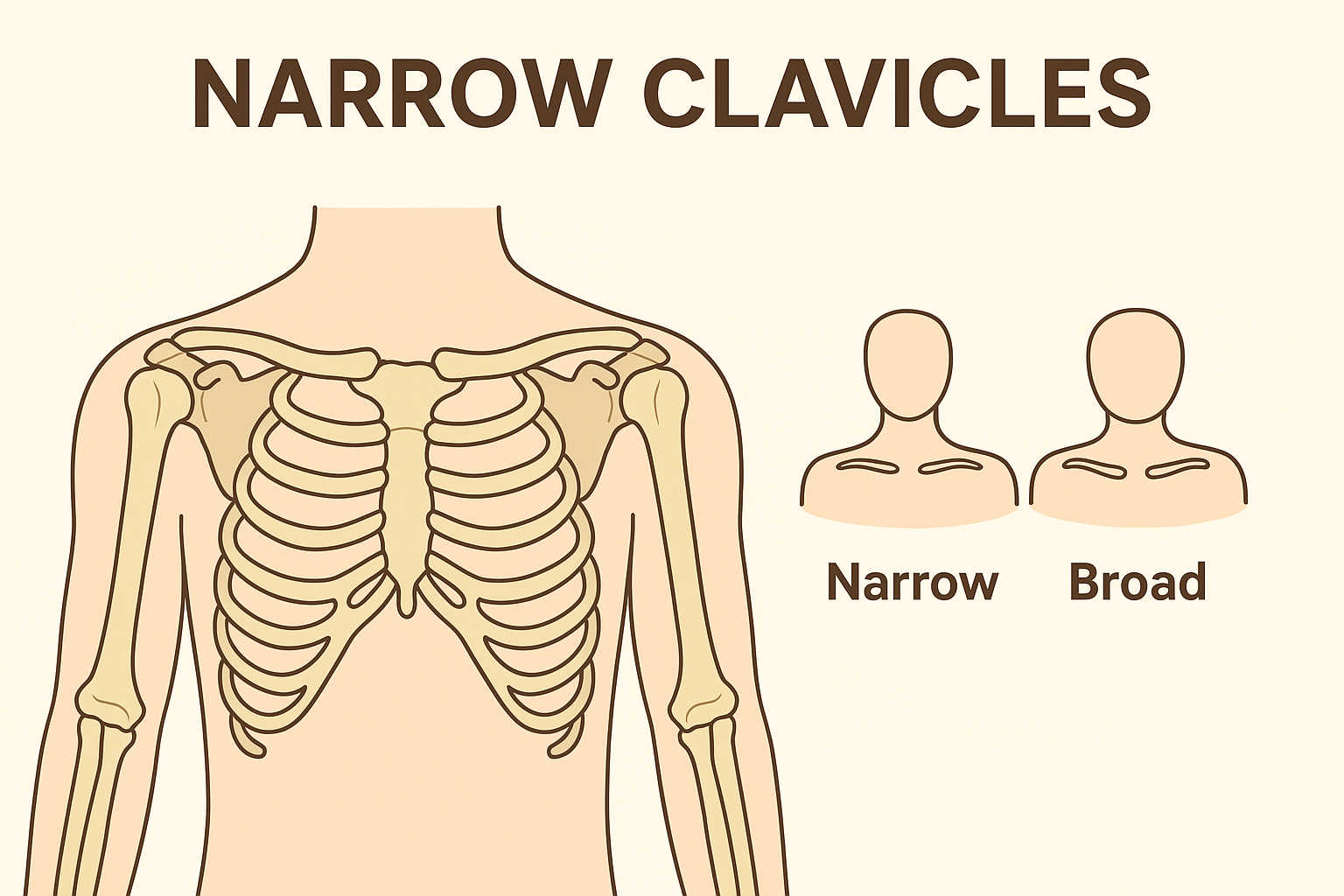
The human body is made up of countless variations that make each person unique, and one such anatomical feature that draws attention in posture, aesthetics, and body structure is the clavicle, commonly known as the collarbone. While many people focus on broad shoulders or well-defined collarbones as signs of symmetry and strength, others may notice they have what are called narrow clavicles. This term refers to collarbones that are shorter or set closer together than average, giving the upper body a narrower appearance. Although “narrow clavicles” are not a medical condition in themselves, they can influence body proportions, posture, and even athletic performance in some individuals.
In this article, we will explore everything about narrow clavicles—from anatomy and possible causes to health implications, appearance, and ways to improve symmetry and confidence through posture, exercise, or lifestyle changes.
What Are Narrow Clavicles?
The clavicle is a long, slender bone that connects the sternum (breastbone) to the scapula (shoulder blade). It serves as a structural support, keeping the shoulders properly aligned with the ribcage and helping maintain balance in the upper body.
When we say “narrow clavicles,” we’re referring to clavicles that are either:
- Shorter in length than average, resulting in a narrower shoulder width.
- More steeply angled downward, which brings the shoulders closer to the neck.
- Closer set in the chest, making the upper torso look compact rather than broad.
This anatomical variation can be genetic, developmental, or related to posture. In most cases, it’s completely natural and not a cause for concern. However, for individuals involved in bodybuilding, modeling, or athletics, narrow clavicles can influence physical aesthetics and how the body looks in proportion.
Anatomy of the Clavicle
To understand narrow clavicles better, it helps to look at the structure and role of the collarbone. Each person has two clavicles that:
- Act as a strut between the shoulder blade and the sternum.
- Support arm movement by keeping the shoulder joint stable.
- Protect nerves and blood vessels that run beneath the collarbone.
- Contribute to overall posture and shoulder alignment.
In men, clavicles tend to be longer and thicker, contributing to a broader shoulder appearance. In women, clavicles are generally shorter and more delicate. Variations in clavicle length and curvature are completely normal across populations.
Common Causes of Narrow Clavicles
Several factors can lead to narrower clavicles or a narrower shoulder structure overall. Some are genetic, while others develop through lifestyle or health-related influences.
1. Genetics
Genetics is the most significant factor determining clavicle shape and length. Just like height or bone density, the clavicle’s proportions are inherited traits. If your family members have narrower shoulders or smaller frames, it’s likely you will too.
2. Developmental Differences
During growth, clavicle development occurs gradually from infancy to early adulthood. If bone growth is slower or interrupted due to nutrition, hormonal imbalance, or injury during development, clavicle length may be slightly shorter than average.
3. Postural Habits
Poor posture, such as slouching or forward-rounded shoulders, can make the clavicles appear narrower. This is common among people who spend long hours sitting, using computers, or leaning forward. The hunched posture reduces shoulder spread and visually shortens the clavicles.
4. Muscular Imbalances
Weak upper back or shoulder stabilizer muscles can cause the shoulders to roll inward, minimizing clavicle prominence. The pectoral muscles may tighten, pulling the collarbones inward and downward, making them look narrower.
5. Bone or Skeletal Conditions
In rare cases, congenital or skeletal disorders like Cleidocranial Dysplasia (CCD) can affect clavicle formation. People with CCD may have partially formed or missing clavicles, resulting in a noticeably narrower shoulder structure. However, such conditions are uncommon.
6. Gender and Body Type
Typically, women have narrower clavicles compared to men, which contributes to a softer upper-body shape. Individuals with ectomorphic body types—those with lean builds and smaller bone structures—also tend to have narrow clavicles naturally.
Visual Appearance of Narrow Clavicles
People with narrow clavicles usually exhibit a few common visual traits:
- Shoulders appear closer together or rounded.
- The neck looks slightly longer or more pronounced.
- The chest may appear smaller or less broad.
- Clothing such as fitted shirts or jackets may hang differently on the shoulders.
These are aesthetic characteristics, not flaws. Many individuals with narrow clavicles still possess strong and functional upper bodies. However, for those pursuing bodybuilding or a more defined physique, clavicle width can play a role in how balanced the shoulders and chest appear.
Are Narrow Clavicles a Medical Concern?
In most cases, narrow clavicles are not a medical issue. They do not cause pain or limit movement unless accompanied by other musculoskeletal imbalances. However, in some rare cases, issues can arise:
- Poor posture-related discomfort: Rounded shoulders and poor posture can lead to neck and upper back pain.
- Reduced shoulder mobility: Tight chest muscles and weak back muscles can restrict shoulder range of motion.
- Nerve compression: Excessive inward rotation of the shoulders can occasionally compress nerves near the collarbone, causing tingling or numbness.
Addressing posture, muscle balance, and flexibility usually resolves these concerns.
Exercises to Improve Shoulder Width and Clavicle Appearance
While you cannot physically lengthen your clavicles, you can improve shoulder width and posture through targeted exercises. Building the surrounding muscles creates a broader, more balanced upper body.
1. Lateral Raises
- Strengthens the middle deltoids (side shoulders).
- Helps widen shoulder appearance and improve proportion.
2. Upright Rows
- Targets deltoids and trapezius muscles.
- Enhances upper shoulder definition and posture.
3. Face Pulls
- Corrects rounded shoulders and strengthens rear deltoids.
- Improves shoulder alignment, reducing the visual “narrow” look.
4. Pull-Ups or Lat Pulldowns
- Develops the lats, creating a V-tapered upper body.
- Visually offsets narrow clavicles by widening the back.
5. Chest Stretches
- Lengthens tight pectoral muscles.
- Allows shoulders to open up and sit wider naturally.
6. Postural Awareness and Core Training
- Strengthens the stabilizing muscles that maintain upright posture.
- Enhances clavicle positioning and overall symmetry.
Consistency with strength training and posture correction can significantly change how clavicles appear, even without altering bone structure.
Clothing and Styling Tips for Narrow Clavicles
Fashion can also play a role in balancing narrow clavicle proportions:
- Choose structured or padded shoulders in blazers or jackets.
- Opt for boat necklines or square neck tops to create width.
- Avoid high necklines that emphasize narrowness.
- Use layering (like scarves or collars) to add visual volume to the upper body.
These subtle adjustments enhance balance and give the illusion of broader shoulders.
Medical or Surgical Considerations
For those curious about medical interventions, there are no direct surgical procedures to “lengthen” clavicles safely for aesthetic reasons. However, reconstructive surgeries may exist for those with clavicle deformities due to trauma or congenital conditions.
Orthopedic specialists focus on functional corrections rather than cosmetic clavicle widening. Thus, the best approach for narrow clavicles remains exercise, posture, and lifestyle improvement, not surgical alteration.
Celebrities and Body Types with Narrow Clavicles
Interestingly, many celebrities and athletes have naturally narrow clavicles yet maintain impressive physiques. Their success highlights how body aesthetics depend on proportion, confidence, and conditioning rather than just bone structure. In fashion and modeling, some individuals with narrow clavicles are considered more photogenic due to symmetrical shoulder lines and elegant neck frames.
Improving Confidence and Body Image
Many people become self-conscious about narrow clavicles, especially in fitness or modeling communities that glorify broad shoulders. However, it’s important to remember that bone structure is just one aspect of your body’s identity. Strength, health, posture, and confidence matter far more than clavicle width.
With consistent training, proper nutrition, and self-acceptance, anyone can enhance their physical presence. Focusing on proportion, posture, and personal strength often leads to the best results—both physically and mentally.
Conclusion
Having narrow clavicles is a natural anatomical variation that affects how your upper body looks but not how well it functions. These differences stem from genetics, development, and posture rather than disease or defect. While you can’t physically lengthen your collarbones, you can broaden your shoulders, improve posture, and enhance muscle symmetry through targeted exercises and lifestyle habits.
Ultimately, what matters most is maintaining a balanced, confident stance. Whether your clavicles are narrow or broad, embracing your natural structure and working with it—rather than against it—creates true physical harmony and self-assurance.